

A blog post can earn more from one sale of an expensive product than from many sales of cheap ones, and the program’s terms decide how much. This guide reads those terms on the program pages themselves, checked on 23 November 2026. It belongs to our guide to affiliate marketing for bloggers (opens in a new tab), part of our guide to making money with Pinterest (opens in a new tab).
What high ticket affiliate marketing means
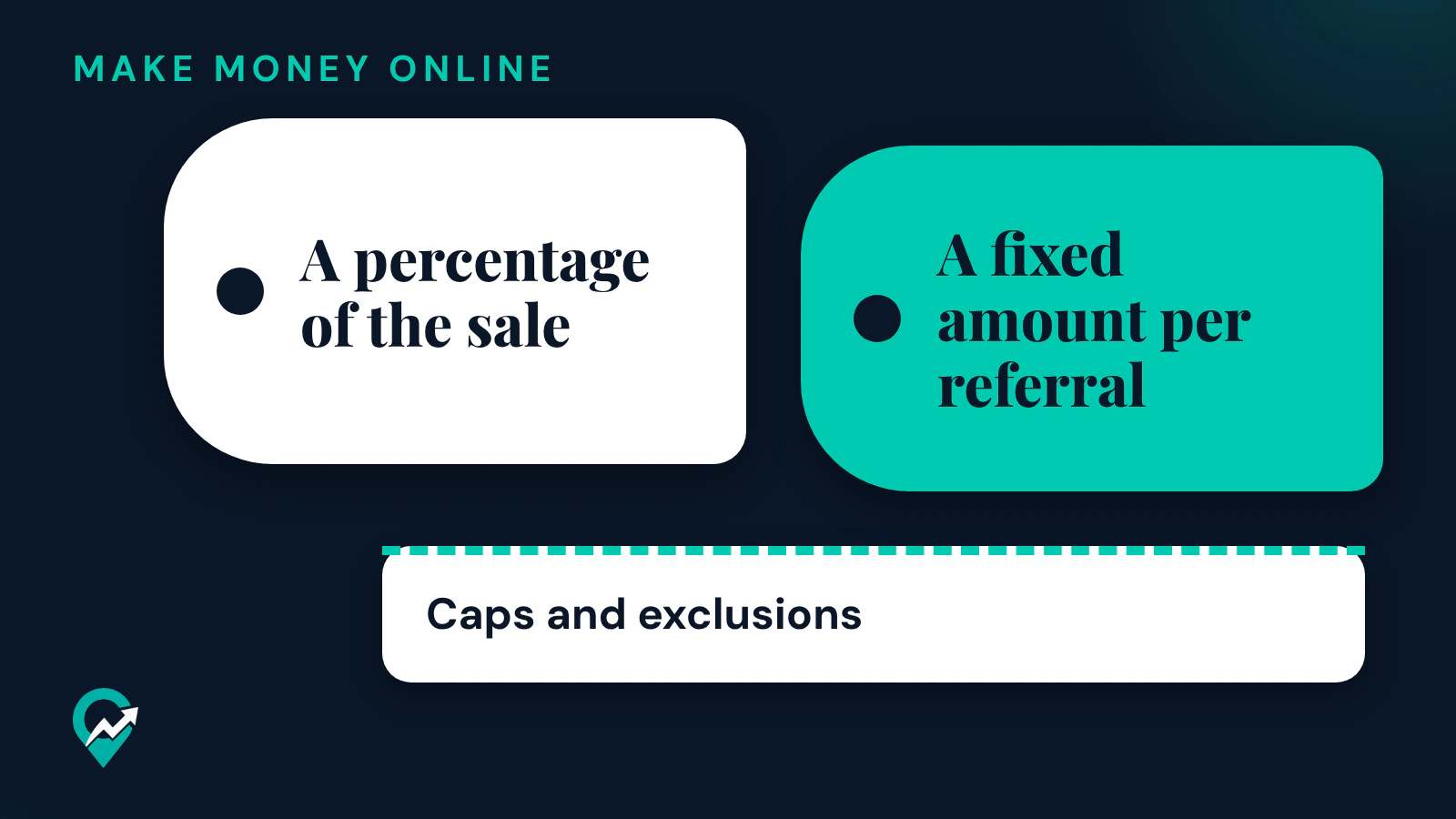
The program pages read for this guide do not use the term. In this guide, high ticket affiliate marketing means promoting a product or a program where one sale pays a large commission. That happens in two ways: the commission is a percentage of a high price, or the program pays a large fixed amount per referral.
Both depend on the terms of the program you join, so the first job is to read them. Our comparison of entry rules for affiliate programs (opens in a new tab) lists where to sign up and what each one checks.
How a big commission is paid
A percentage of the sale
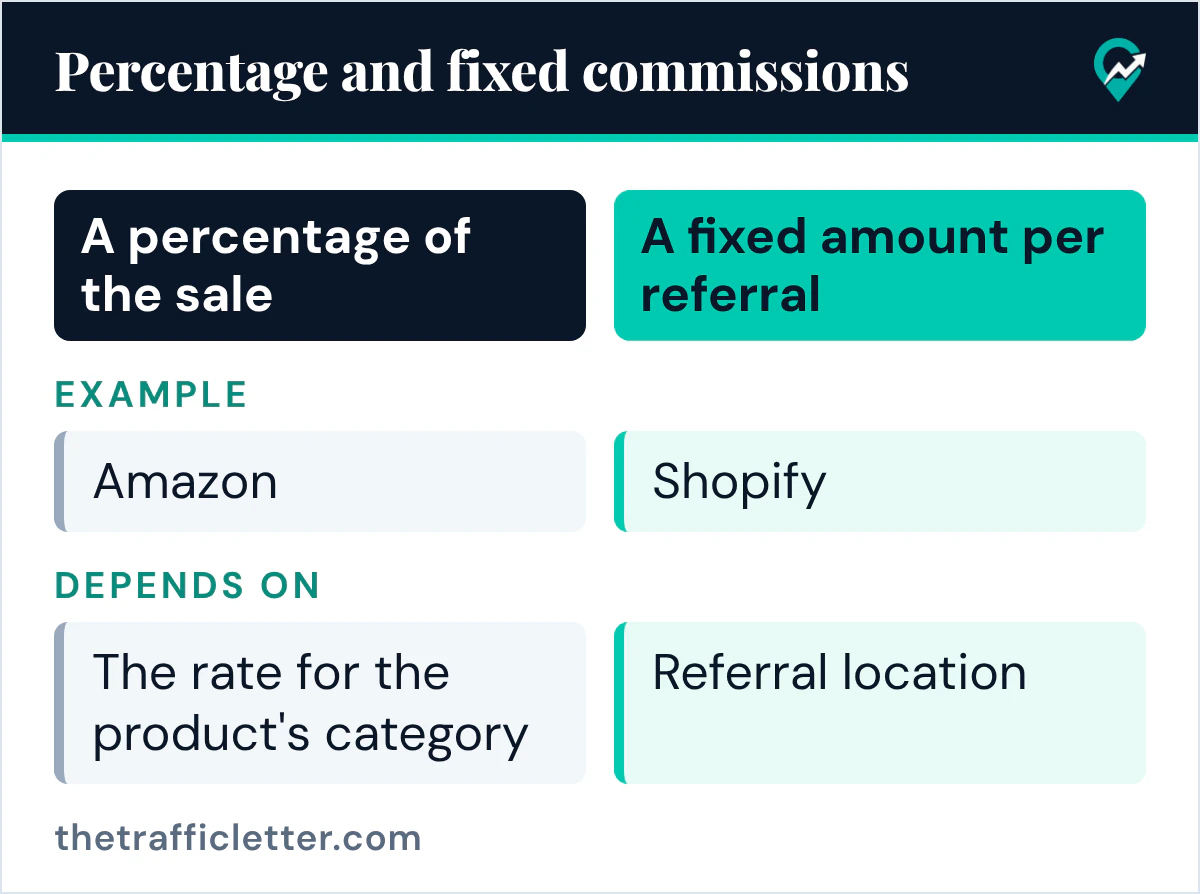
Amazon’s Standard Commission Income Statement sets a fixed rate of qualifying revenue for each product category. A few of the rates on that page:
| Product category on Amazon’s statement | Fixed commission income rate |
|---|---|
| Luxury Beauty, Luxury Stores Beauty, Amazon Explore | 10.00% |
| Physical Books, Kitchen, Automotive | 4.50% |
| Furniture, Home, Home Improvement, Tools | 3.00% |
| PC, PC Components, DVD and Blu-Ray | 2.50% |
| Televisions, Digital Video Games | 2.00% |
With a percentage, the commission grows with the price, but the rate changes by category. A more expensive product in a low-rate category can pay less than a cheaper one in a high-rate category.
Etsy’s program also pays on the sale. Etsy says each qualifying sale earns a commission, excluding tax, shipping, returns and cancellations, that commission is paid on the order price, and that its cookie period is 30 days for affiliates.
A fixed amount per referral
Some programs pay a set amount instead. Shopify’s affiliate page says affiliates “Earn up to $150 USD per qualified referral”, that commissions are paid for every signup to the Basic, Grow or Advanced paid plans, and that commission amounts vary by referral location.
Caps and exclusions
A high price is not always a high commission. Amazon’s statement limits the commission for products categorized as fine art to a maximum of $200 per product, regardless of the qualifying revenues received from the sale. The same table sets 0.00% for some categories, among them gift cards, wireless service plans and vehicles, leasing and sales.
Terms to read before you pick a program
Before you build a post around an expensive product, find these on the program’s own page:
- The commission type: a percentage of the sale or a fixed amount.
- The rate for the product’s category.
- Any cap or 0.00% category.
- The cookie period.
- What counts as a qualifying sale or referral.
Networks give access to many programs at once. Awin says creators can connect with more than 30,000 brands and match with brands in fashion, travel, finance, retail and more. CJ’s publisher page invites publishers to begin partnering with fintech brands. Read the list above for every program you join there.
Content for a high ticket review
Google’s review guide describes what helps people learn about things they are considering. It asks reviews to evaluate from a user’s perspective and lists best practices, among them:
- provide evidence such as visuals, audio or other links of your own experience with what you are reviewing;
- share quantitative measurements about how something measures up;
- discuss the benefits and drawbacks, based on your own original research;
- consider including links to multiple sellers, so the reader can buy from their merchant of choice;
- when recommending something as the best, include why, with first-hand supporting evidence.
Google’s spam policies name the opposite. They define thin affiliation as content with product affiliate links where the descriptions and reviews are copied directly from the original merchant without any original content or added value. Good affiliate pages, the same policy says, add value with information about price, original product reviews, rigorous testing and ratings, and product comparisons.
Disclosure and link markup
The FTC’s endorsement guides give the example of a coffee lover whose blog reviews coffee makers with affiliate links, and say the reviews should clearly and conspicuously disclose the compensation. The guides define clear and conspicuous as difficult to miss and easily understandable by ordinary consumers. This is general information, not legal advice.
In the HTML, Google’s outbound links page says to mark paid links with rel=“sponsored”, and that nofollow is still an acceptable way to flag them, though sponsored is preferred. Our guide to affiliate links on Pins (opens in a new tab) covers the same links on Pins.
A prompt to plan a high ticket review
An assistant can lay out the review once you have your own notes. Use it in ChatGPT, Claude, Gemini or any AI assistant:
I am writing a review of [product] for [your reader] on my blog about [your niche]. Here are my notes from using it and the program's terms: [paste your notes and the terms]. Propose an outline with headings for: who the product is for, the measurements from my notes, benefits and drawbacks, comparable products to consider, and where to buy. Use only facts from my notes and add no prices, rates or results.Right after
- Set up the disclosure and the links with our guide to how affiliate links work on a blog (opens in a new tab).
- Compare entry rules with our list of affiliate programs for bloggers (opens in a new tab).
- See where affiliate income fits among the other options in our guide to the ways to earn from a blog (opens in a new tab).